17. June 2026

Interview with Florian Zimmermann Interview with Florian Zimmermann: “False News Stories”: Why Fact-Checks are a Weak Corrective

“False News Stories”: Why Fact-Checks are a Weak Corrective – Researcher Explains

• New experiment shows: Fake stories keep shaping people’s beliefs after debunking

• Interview with Florian Zimmermann, EPoS Economic Research Center 


Bonn, Mannheim, 17.06.2026 – In public debates, false news stories, sometimes generated by AI, 
continue to influence what people believe, even after being proven untrue. To find out how 
effective corrections should be designed, researchers examined how storytelling, as opposed to 
simple quantitative information, affects people’s beliefs. The findings underline that stories with 
vivid details trigger “mental simulations” that resist debunking. Since AI-generated deepfakes, such 
as photos, videos, or audio files, are particularly compelling stories, the researchers argue that 
“counter-stories” engaging the same communication channels need to be part of the antidote. 
These are insights of a new study by the EPoS Economic Research Center at the Universities of Bonn 
and Mannheim, published in the discussion paper “Learning from False Stories”. 

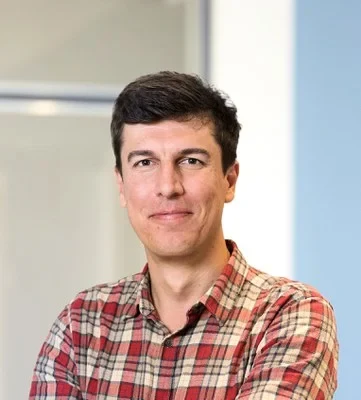
Interview with Florian Zimmermann
Interview with Florian Zimmermann © Uni Bonn ECONtribute
Download all images in original size The impression in connection with the service is free, while the image specified author is mentioned.
Please fill out this field using the example format provided in the placeholder.
The phone number will be handled in accordance with GDPR.

Mr. Zimmermann, why are false stories so hard to correct?

Florian Zimmermann: In our study, we show that false stories shift people’s beliefs substantially. 
When people read or listen to a false story, which contains evaluative or emotional content, they 
vividly picture what is happening, a process we call “mental simulation”. It seems that the brain 
replicates what is being described in a way similar to a real experience. This changes how people think 
about the information they have just learned and persists even after debunking. 
False quantitative information, presented as neutral factual claims, does not have such a lasting effect. 
According to our findings, people are more confident in beliefs formed after reading false stories 
compared to false statistics, even though these beliefs are further away from the rational benchmark. 
We also observed that at least some people seem completely unaware that they are influenced by 
false stories.

Could you give us a real-life example of a false story that was hard to debunk?

Sure, let us take the allegations of voter fraud in the 2020 U.S. presidential election, for example. They were largely sustained by detailed stories – claims about specific election officials, precincts, 
voting machines, and suitcases of ballots – rather than by statistical evidence, which pointed in the 
opposite direction. Independent reviews, court rulings, and recounts debunked the specific claims. Yet, 
many people in the U.S. continued to believe the election had been compromised.

If official debunking does not work, how should falsehoods and deepfakes be corrected?

Our findings suggest that quantitative rebuttals are not enough to correct story-based falsehoods, 
because they work via a different cognitive “channel”. Effective corrections may need to match the 
format of the falsehood they target – mental simulation. According to our research, counter-stories 
that engage the same imaginative and emotional channels may be more effective than dispassionate 
fact-checks. They could be part of corrective interventions. With the rise of AI-generated content, such 
as photos, videos, or audio files, which make it easy to package falsehoods as vivid, emotionally 
compelling stories, we think there is an urgent need to find effective antidotes. 

The presented discussion paper is a publication without peer review of the Collaborative Research Center Transregio 224 EPoS. Access the full discussion paper here.

Find the list of all discussion papers of the CRC here.

Authors
Robin Musolff, Postdoctoral Researcher, Department of Economics, University of Cologne 
Christopher Roth, Professor of Economics and Management, University of Cologne 
Florian Zimmermann, Professor of Economics, University of Bonn and member of EPoS Economic Research 
Center

Press Contact
econNEWSnetwork
Sonja Heer
Tel. + 49 (0) 40 82244284 
Sonja.Heer@econ-news.de

Contact 
Prof. Florian 
Zimmermann 
University of Bonn 
florian.zimmermann@uni-bonn.de 

Download

Download

Wird geladen